

How Do Solid Color Wallpapers Shape Interior Aesthetics Today?
Solid color wallpapers have become a foundational material in contemporary interior design because they deliver visual clarity, controlled atmosphere, and a uniform design language that complements both residential and commercial environments. These wallpapers are engineered with consistent pigmentation, smooth texture, and stable light-fastness to support long-term use without color drift.
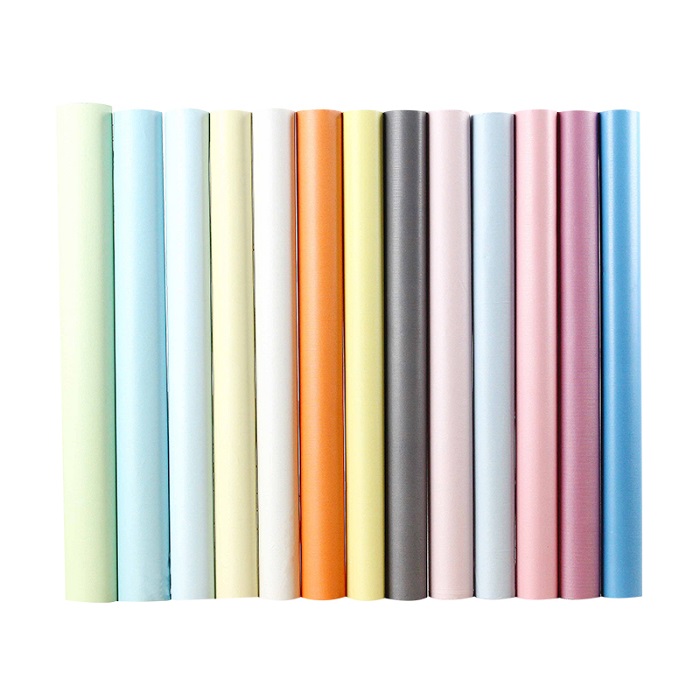
The following product parameter set summarizes the structural and technical characteristics that commonly define a high-grade solid color wallpaper line:
| Parameter Category | Specification Detail |
|---|---|
| Base Material | Non-woven fiber, premium vinyl-coated paper, textile-backed surfaces |
| Surface Texture | Smooth matte, soft satin, subtle linen grain, embossed micro-texture |
| Color System | Single-tone uniformity using calibrated pigment dispersion |
| Roll Dimensions | Standard 53 cm x 10 m; extended 70 cm x 10 m; custom lengths available |
| Thickness | 180–320 microns depending on base substrate |
| Weight | 120–260 g/m² for standard interior use |
| Installation Method | Paste-the-wall, paste-the-paper, or pre-glued technology |
| Light Fastness | ≥ 6 Blue Wool Scale rating |
| Cleaning Method | Wipeable or washable depending on coating |
| Fire Rating | Options meeting EN13501-1 or ASTM E84 standards |
| Application Scope | Residential, office, hospitality, retail interior walls |
How Do Solid Color Wallpapers Influence Interior Environments?
Solid color wallpapers create continuity and controlled visual balance. Without pattern repetition, they provide a seamless backdrop that allows furniture, décor, and architectural features to take the visual lead. Their influence is expressed through three primary design mechanisms: color psychology, spatial modulation, and finish consistency.
Color psychology gives single-tone surfaces an impactful role in mood construction. Cooler tones can establish calm, moderated environments suitable for healthcare facilities, reading rooms, and private homes. Warmer tones can support hospitality settings where visual warmth increases environmental comfort. Mid-tone neutrals offer controlled light reflection and serve as universally compatible choices for offices, rental properties, or multi-unit developments seeking broad market appeal.
Spatial modulation is achieved because uniform surfaces visually expand or contract perceived room boundaries. Light colors push perceived walls outward. Deep colors concentrate focus toward furnishings or architectural accents. Consistent color coverage also minimizes visual clutter, enabling environments that favor minimalism, continuity, and clear wayfinding.
Finish consistency is particularly essential in commercial deployments. Retail environments that rely on a strong brand palette benefit from the stable chromatic integrity of solid wallpapers. Hotels rely on repeatable finishes for chain-wide standardization. Designers use these wallpapers as a baseline for establishing coherent design systems across entire building floors, lobbies, and guest areas.
Solid color wallpapers thus function as a building block within interior strategy rather than a decorative afterthought. They give designers precision, predictability, and a streamlined palette for managing spatial experience.
How Can Design Teams Select the Right Solid Color Wallpaper for Long-Term Performance?
Selection is driven by structural characteristics, environmental requirements, maintenance expectations, and color strategy. Performance outcomes depend on matching product specification to its intended use.
First, substrate choice determines installation efficiency and durability. Non-woven substrates are dimensionally stable, breathable, and straightforward to install using paste-the-wall methods. Vinyl-coated surfaces provide enhanced abrasion resistance and are appropriate for corridors, restaurants, and children’s rooms where cleaning frequency is high. Textile-backed options introduce tactile quality and greater acoustic dampening.
Second, coating chemistry influences washability and stain resistance. A washable satin surface allows periodic cleaning without discoloration, while a matte soft-touch coating improves tactile comfort but may be more prone to marking. Designers benefit from assessing cleaning protocols in advance to avoid maintenance challenges.
Third, colorfastness ensures that installed walls maintain uniform appearance despite light exposure. UV-exposed retail environments or rooms with large windows require high-performance pigments to avoid patchy discoloration over time.
Fourth, color integration within interior strategy must consider furniture finishes, flooring tones, and lighting temperature. LED lighting, increasingly standard, can shift visual perception of pigments. Testing sample swatches under installed lighting reveals how tones behave throughout daylight cycles.
Finally, installation methodology determines operational efficiency. Larger rolls reduce seam counts. Pre-glued technology facilitates rapid replacement during hotel renovation cycles. Paste-the-wall methods reduce labor time and moisture absorption concerns.
Appropriate selection prevents aesthetic inconsistency, reduces maintenance burden, and supports lifecycle value of the design investment.
Frequently Asked Questions About Solid Color Wallpaper
Q1: How does solid color wallpaper differ from paint in terms of long-term visual consistency?
A1: Solid color wallpaper provides controlled pigment density and uniform surface finish that remains stable across entire wall segments. Paint is influenced by application technique, roller texture, and wall absorption variability, which may lead to slight tonal inconsistencies or overlapping marks. Wallpapers also maintain finish consistency longer because the factory-applied coating prevents micro-fading and reduces surface wear compared to painted walls exposed to cleaning or environmental stress.
Q2: How should solid color wallpaper be maintained in high-traffic commercial spaces?
A2: Maintenance usually involves periodic surface wiping using diluted neutral detergent and a soft cloth. For vinyl-coated surfaces, more frequent cleaning is supported without damaging the coating. In commercial environments such as hallways or retail interiors, selecting a washable or scrub-resistant coating is recommended. Routine inspection for seam lifting or impact marks ensures longevity. Proper maintenance protocols preserve both aesthetic continuity and functional performance.
How Will Solid Color Wallpaper Align With Future Design Trends?
Solid color wallpapers are positioned to evolve alongside shifts in architectural practice, sustainability objectives, and experiential interior design. Their trajectory is shaped by environmental performance, sensory ergonomics, and the increasing preference for stable visual frameworks in modern spaces.
Sustainability trends are driving greater adoption of non-woven substrates derived from responsibly sourced fibers as well as low-VOC coatings. Product lines are expected to include more recyclable components and coatings that improve indoor air quality. Manufacturers are introducing water-based adhesive compatibility and eco-conscious pigment technologies that maintain color saturation while minimizing chemical load.
Sensory ergonomics, a rising consideration in wellness-driven design, favors solid surfaces that reduce visual noise. Soft neutral palettes help create restorative environments aligned with well-being standards used in workplaces, schools, and healthcare projects. Texture plays a major role in future adoption. Micro-embossed finishes, subtle linen grains, and satin-matte blends will continue to gain favor as they enhance tactile comfort and light diffusion.
Global design convergence also encourages the use of universal color systems that travel easily across regional markets. As interior design becomes more globalized, solid wallpapers function as a standardized foundational material adaptable to local décor preferences. Brands are increasing their color catalog depth to support designers working across multi-country portfolios, allowing them to maintain brand consistency while adjusting to cultural color expectations.
Digital rendering and virtual sampling technologies further expedite product specification. Designers increasingly rely on precise digital color mapping, making consistent wallpapers essential for predictable modeling results. Solid colors integrate seamlessly into BIM workflows, furnishing architects with reproducible surface data.
The future of solid color wallpaper is strongly tied to its ability to support modular design thinking, sustainability objectives, and multisensory experience planning, reinforcing its role as a primary structural element of interior design rather than a supplementary component.
Solid color wallpapers offer controlled visual structure, reliable performance, and adaptable design potential. Through calibrated pigments, engineered substrates, and advanced coatings, they provide stable backgrounds that serve residential and commercial environments with equal efficiency. Their application extends beyond aesthetics into spatial modulation, maintenance optimization, and long-term color stability. As design priorities shift toward sustainable materials, sensory comfort, and globally coherent color standards, solid color wallpapers will continue to play an integral role in shaping interiors.
Hongfeng, as a specialized manufacturer with strong technical expertise and ongoing product development capabilities, provides robust solid color wallpaper solutions designed for both durability and aesthetic clarity. For detailed specifications, project consultation, or customized solutions, contact us to discuss how our materials can support your next interior design requirement.